



Lo Scontro
35.000,00 €
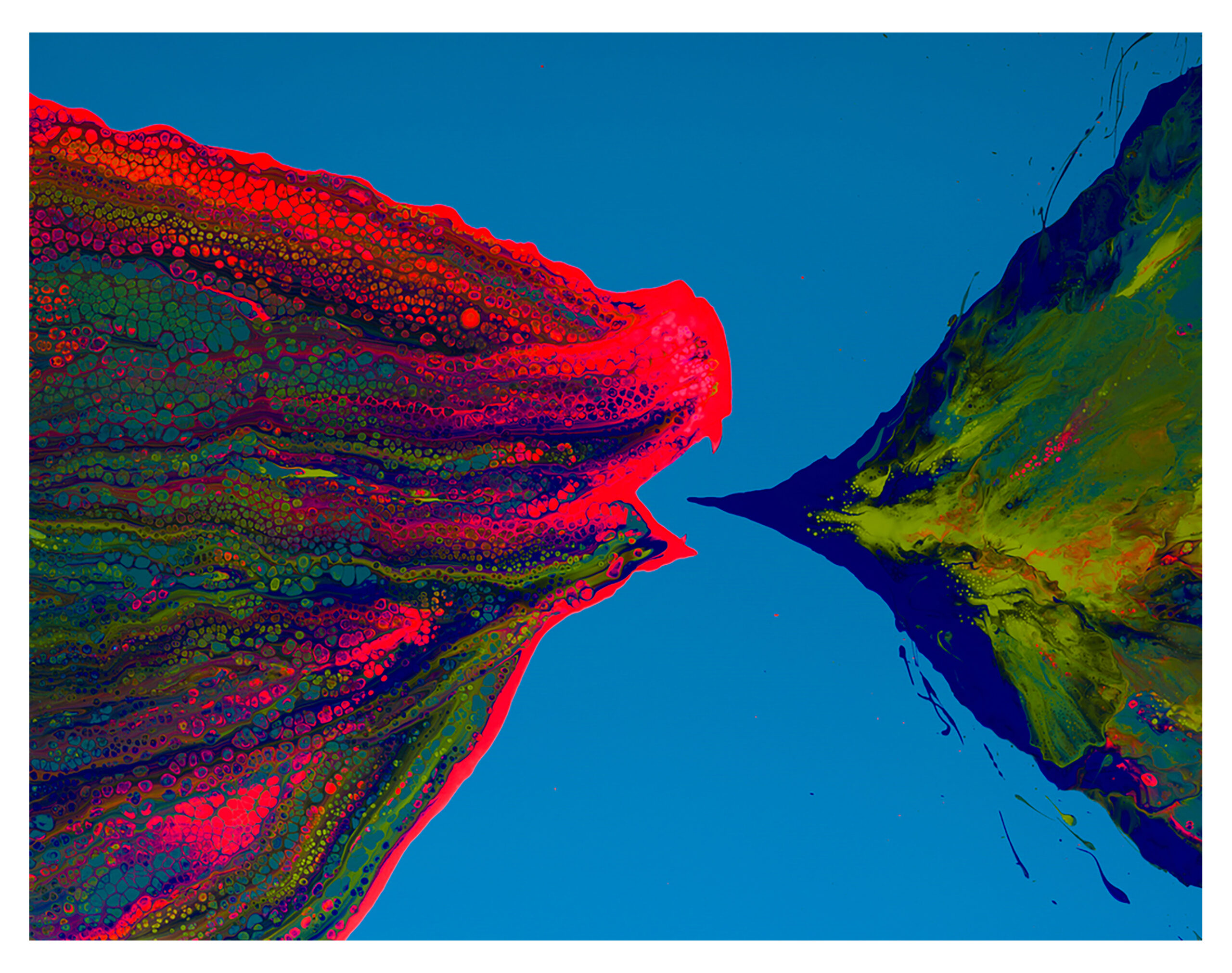
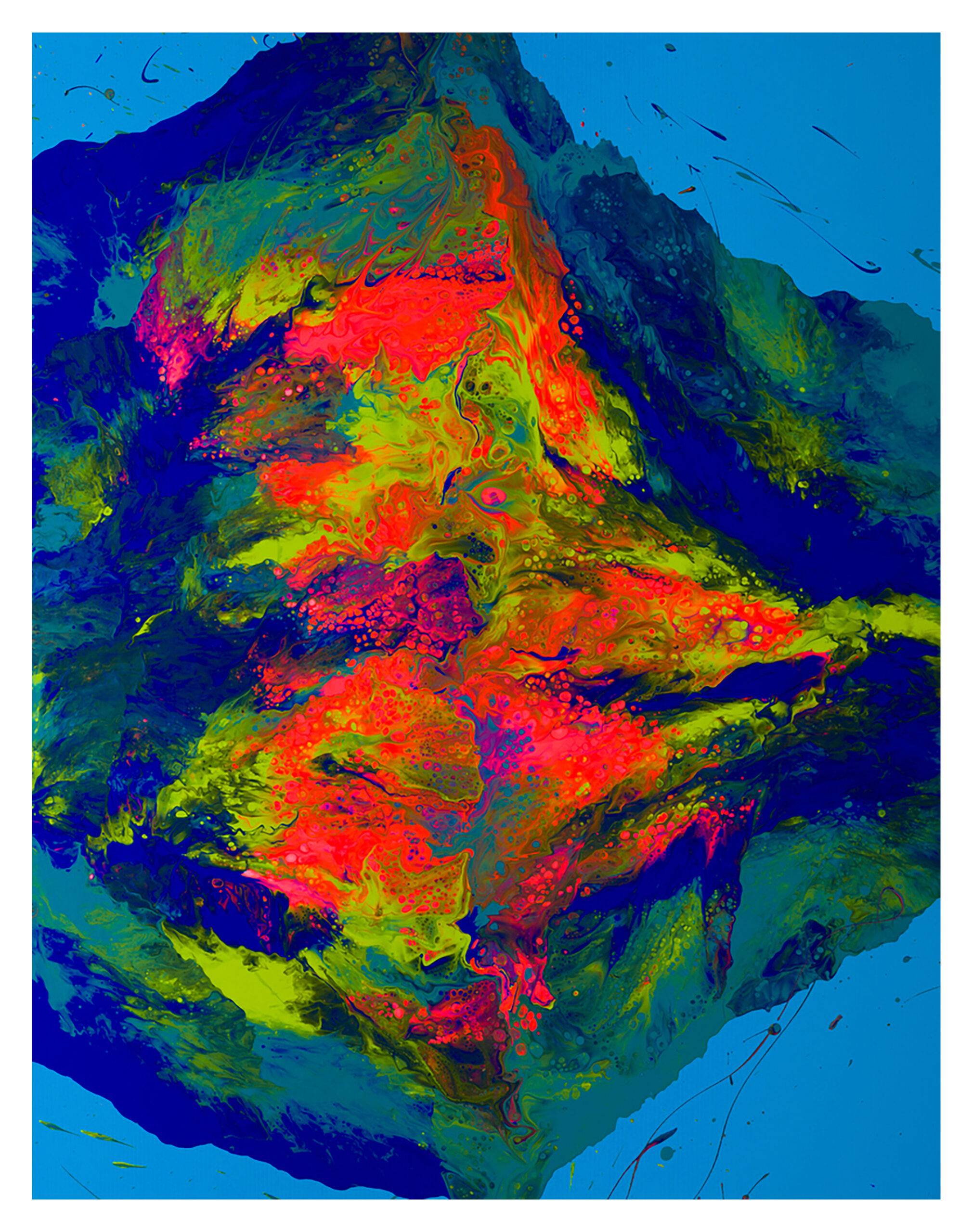
A “Pop-Pouring” reinterpretation of the battle inaugurated by “VS”. The theme, particularly dear to the artist, represents the nerve center of his work, summarized in that intense indefinite mass that takes shape in the central painting. From this triptych some parallels emerge between White King’s life and his works. An ancient fear re-emerges from the impetuous whirlwind of colors: it is the anxiety of the block, the concern for the distance from one’s work, the torment linked to the loss of the degree of concentration necessary for the re- presentation to be accompanied by the idealization of the same. Negative experiences end up influencing the artist’s activity. In this sense, in its viscerality, White King’s pictorial gesture can only be humoral and deeply emotional. It has to face a series of obstacles that would seem insurmountable: the outside world, the experiences of everyday life and, above all, the artist himself. The triptych looks at the theme of confrontation as the generalization of any conflict: physical, verbal, psychological. White King puts his actors – the reflex colors – on the field and lets them clash against each other. There is no intentionality in the conflict but an unconscious and unstoppable activity: it is as if this painting – so vibrant, magnetic and alive – ended up revealing the incessant work of creative consciousness, the implementation of thought itself. In fact, White King does not start from a specific theme but only discovers it in retrospect. He works as if in a trance state, identifying painting with a magical and hypnotic activity with even thaumaturgical implications.
His is a spontaneous and prodigious process, the canvas is the privileged realm of this outburst. Yet there is something in excess: a remnant, a trace, something more that forces him to always return to the topic. Something unfinished and overwhelming that White King, perpetually dissatisfied, searches for in the following paintings. The clash, by its very nature, can never end. The dream, perhaps a mirage, is to arrive at the work that can exhaust the theme once and for all. At this point, the brilliant intuition of the bright reflex colors could be paradoxical: the negative experience of the conflict is depicted in the guise of a seductive and explosive “Pop-Pouring”. This is undeniably a very strong contrast aimed at reiterating the idea of the triptych: we can – and must – also treasure negative experiences, they represent our most precious baggage capable of giving us the strength to evolve. Here the clash takes on the characteristics of a fertile and earthy tension capable of generating creative energy. It is the bright colors that give rise to this positivity. This triptych, part of the ascending climax inaugurated by “VS”, follows the intensification of the techniques of the previous painting. If in “VS” it was “Figurative Pouring Pendulum” (“FPPe”) in “The clash” we arrive at “Figurative Pouring Painting” (“FPPa”): here the conflict occurs, the union between cells. The protagonist of “VS” is not the clash per se but the moment that immediately precedes it: two opposing figures, each in its position, ready for a duel. The struggle exists only in potentiality. Here, however, through the Air Swipe – a technique used to make the cells collide in the central mass – the two subjects finally diverge. These elements are depicted in cellular pouring to underline, once again, that plane of absolute equality on which they are placed. Finally, the colors of which the cells are composed – that is the internal ones – are taken up in the central part as if it were a real clash between souls.
Additional information
| Dimensions | 70 × 90 cm |
|---|---|
| Date | 26-01-2021 |
| Technique | Acrylic Pouring, Acrylic Pouring Spin Art |
Una reinterpretazione in chiave "pop" della battaglia inaugurata da "VS". Il tema, particolarmente caro all'artista, rappresenta il centro nevralgico del suo lavoro, riassunto in quell'intensa massa indefinita che prende forma nel quadro centrale. Da questo trittico emergono alcuni parallelismi tra la vita di White King e le sue opere. Un'antica paura riemerge dal turbinio impetuoso dei colori: è l'ansia del blocco, la preoccupazione per la distanza dal proprio lavoro, il tormento legato alla perdita del grado di concentrazione necessario affinché la ripresentazione si accompagni all'idealizzazione dello stesso. Le esperienze negative finiscono per influenzare l'attività dell'artista. In questo senso, nella sua visceralità, il gesto pittorico di White King non può che essere umorale e profondamente emotivo. Deve affrontare una serie di ostacoli che sembrerebbero insormontabili: il mondo esterno, le esperienze della vita quotidiana e, soprattutto, l'artista stesso. Il trittico affronta il tema del confronto come generalizzazione di ogni conflitto: fisico, verbale, psicologico. White King mette in campo i suoi attori - i colori riflessi - e li lascia scontrare gli uni contro gli altri. Non c'è intenzionalità nel conflitto, ma un'attività inconscia e inarrestabile: è come se questo quadro - così vibrante, magnetico e vivo - finisse per rivelare il lavoro incessante della coscienza creativa, l'attuazione del pensiero stesso. In effetti, White King non parte da un tema specifico, ma lo scopre solo a posteriori. Lavora come in uno stato di trance, identificando la pittura con un'attività magica e ipnotica con implicazioni addirittura taumaturgiche.
Il suo è un processo spontaneo e prodigioso, la tela è il regno privilegiato di questo sfogo. Eppure c'è qualcosa in eccesso: un residuo, una traccia, qualcosa in più che lo costringe a tornare sempre sul tema. Qualcosa di incompiuto e schiacciante che White King, perennemente insoddisfatto, cerca nei dipinti successivi. Lo scontro, per sua natura, non può mai finire. Il sogno, forse un miraggio, è quello di arrivare all'opera che possa esaurire il tema una volta per tutte. A questo punto, l'intuizione geniale dei colori riflessi potrebbe risultare paradossale: l'esperienza negativa del conflitto viene rappresentata sotto le spoglie di un "Pop-Pouring" seducente ed esplosivo. Si tratta innegabilmente di un contrasto molto forte, volto a ribadire l'idea del trittico: possiamo - e dobbiamo - fare tesoro anche delle esperienze negative, che rappresentano il nostro bagaglio più prezioso in grado di darci la forza di evolvere. Qui lo scontro assume le caratteristiche di una tensione fertile e terrosa capace di generare energia creativa. Sono i colori vivaci a dare origine a questa positività. Questo trittico, parte del climax ascendente inaugurato da "VS", segue l'intensificazione delle tecniche del quadro precedente. Se in "VS" si trattava di "Figurative PouringPendulum" ("FPPe") in "The clash" si arriva a "Figurative Pouring Painting" ("FPPa"): qui avviene il conflitto, l'unione tra cellule. Il protagonista di "VS" non è lo scontro in sé, ma il momento che lo precede: due figure opposte, ciascuna nella sua posizione, pronte al duello. La lotta esiste solo in potenza. Qui, però, attraverso l'Air Swipe - una tecnica utilizzata per far collidere le cellule nella massa centrale - i due soggetti finalmente divergono. Questi elementi sono rappresentati in colata cellulare per sottolineare, ancora una volta, il piano di assoluta uguaglianza su cui sono posti. Infine, i colori di cui sono composte le cellule - cioè quelli interni - vengono ripresi nella parte centrale come se si trattasse di un vero e proprio scontro tra anime.