
La Caccia
8.300,00 €
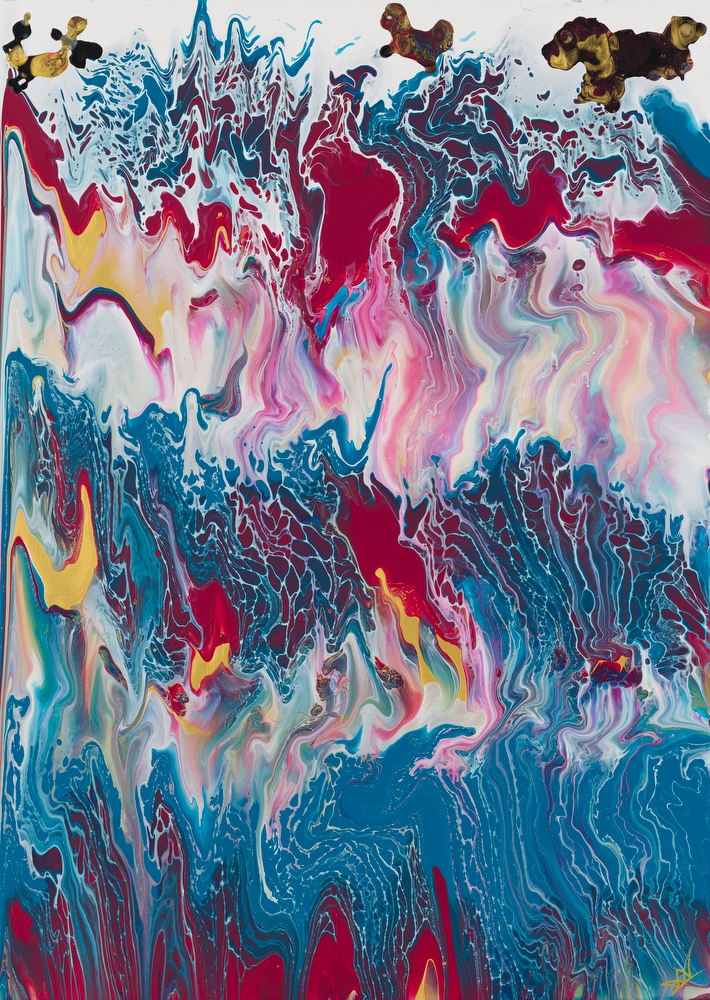
The sixth “ Smemagold” painting and the second one made with the “pouring in pouring” or “pouring on pouring” technique. It is the only case in the entire series in which pearl white is used in addition to the three main colours.
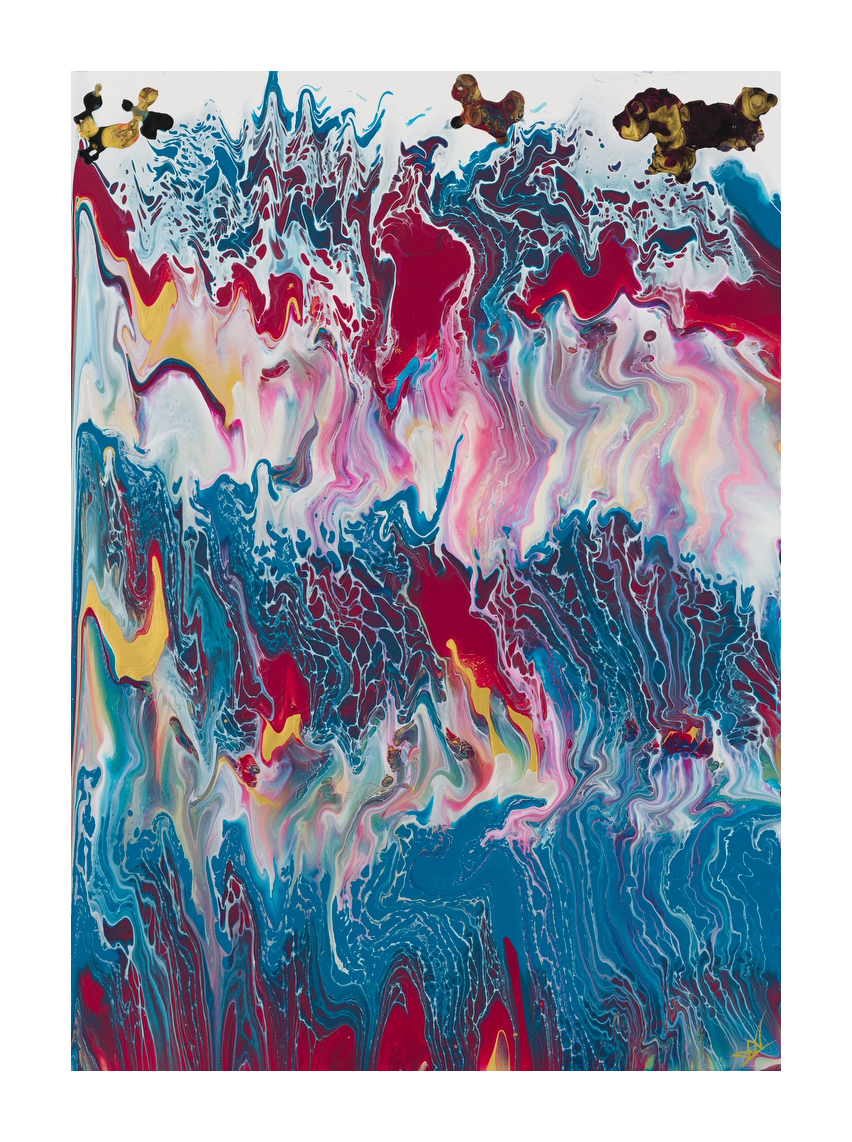
The scene takes place in a field where a dog appears to be chasing a hare and a sheep. Yet the dog’s actual target is only the hare – the she- ep is just in its path. From an optical point of view, however, it gives the impression of the sheep also being chased. If we distinguish between the planes, the interpretation changes – although the dog is the protector of the flock, it is only interested in its prey. Here, two levels of metaphor thus arise. The first represents hunger as an essential and overriding need. The dog neglects its duty of protecting the flock, in order to follow its physiological needs. If the task does not coincide with the need – and the duty with the being – then checkmate ensues. The dog has no qualms about trampling on the sheep for food, just as man is prepared to step over his own kind in order to survive. Morality only comes into being after having given vent to one’s physiological needs. The second level of metaphor further reinforces the perspective that the dog will never reach its prey (the hare) because there will always be the sheep in the way. Thus the dog is faithful to its role as a protector of the flock. The undulation of the pouring grass and the movement of the paws of the three subjects depicted enable the movement of the painting to be infinite.
Additional information
| Dimensions | 70 × 50 cm |
|---|---|
| Series | Smemagold |
| Date | 06-2020 |
| Technique | Acrylic Pouring on canvas |
È il sesto dipinto "Smemagold" e il secondo realizzato con la tecnica del "versamento nel versamento" o "versamento su versamento". È l'unico caso in tutta la serie in cui viene utilizzato il bianco perlato in aggiunta ai tre colori principali.
La scena si svolge in un campo dove un cane sembra inseguire una lepre e una pecora. Tuttavia, l'obiettivo reale del cane è solo la lepre, mentre la pecora è solo sul suo cammino. Da un punto di vista ottico, tuttavia, si ha l'impressione che anche la pecora sia inseguita. Se distinguiamo i piani, l'interpretazione cambia: sebbene il cane sia il protettore del gregge, è interessato solo alla sua preda. In questo caso, emergono due livelli di metafora. Il primo rappresenta la fame come bisogno essenziale e prioritario. Il cane trascura il suo dovere di proteggere il gregge per seguire i suoi bisogni fisiologici. Se il compito non coincide con il bisogno - e il dovere con l'essere - si arriva allo scacco matto. Il cane non si fa scrupoli a calpestare la pecora per procurarsi il cibo, così come l'uomo è pronto a calpestare i suoi stessi simili per sopravvivere. La moralità nasce solo dopo aver dato sfogo ai propri bisogni fisiologici. Il secondo livello di metafora rafforza ulteriormente la prospettiva che il cane non raggiungerà mai la sua preda (la lepre) perché ci sarà sempre la pecora di mezzo. Il cane è quindi fedele al suo ruolo di protettore del gregge. L'ondulazione dell'erba che cola e il movimento delle zampe dei tre soggetti raffigurati rendono infinito il movimento del dipinto.